



Photography to Help Me Grieve: 3 Ways Taking Photos Has Helped Me Heal
Photography to Help Me Grieve: 3 Ways Taking Photos Has Helped Me Heal
By Tiffany D. Brown | Documentary Family Photographer, Lake County, Florida
The world could be crashing down around you — and sometimes it is. But there’s something about stepping outside with a camera in your hands, scanning the world for something beautiful, something unusual, something worth capturing, that pulls you out of the spiral. Even if just for a moment.
That’s what photography has done for me.
When my father passed away from lung cancer, my entire world shifted. He was the one who first put a camera in my hands. He was our family’s documentarian — the person who made sure every birthday, every holiday, every ordinary Tuesday was captured and kept. Losing him didn’t just leave a hole in my heart. It left a silence in the places where his presence used to fill the room.
But somewhere in the grief, I found my way back to the thing he gave me: the camera.
I didn’t set out to use photography to help me grieve. It just happened. And looking back, I can see three distinct ways it has carried me through the hardest season of my life.
1. It Gives Back More Than It Takes
There’s truly nothing like giving back to others to help you work through your own challenges.
Making someone smile. Doing something meaningful for them. Capturing a moment they’ll hold onto forever. When I’m behind the camera during a family session, I’m not just taking pictures — I’m pouring into someone else’s story. And in the process, something quietly heals inside of me.
So much goes into creating a quality photograph. It’s not just pointing and clicking — it’s reading the energy in the room, finding the light, anticipating a moment before it happens, composing a frame that tells a story. It requires your full attention. Your full presence. And when you’re deep in that creative flow, there’s very little room left for the weight you’ve been carrying.
That’s the gift photography gave me during my grief. It didn’t ask me to forget. It invited me to focus on someone else’s joy, someone else’s connection, someone else’s love story. And in doing that, it reminded me that beauty still exists, even when your own world feels dim.
Whether it’s a family laughing together at the park, a mother holding her newborn, or a couple slow-dancing in their kitchen — every moment I capture for someone else is a moment that gives something back to me.

There’s nothing like giving back to others to help you work through your own challenges.
2. It Changed How I See the World
Something happens to you once you lose a parent.
When you lose a mother or a father, it’s one of the few times you experience grief or disappointment without that person who has always had your back. After all, who was always there to pick you up after you fell? Usually a parent. And with them gone, it’s almost as though you’re parenting yourself through the hardest thing you’ve ever faced.
This unique perspective brings with it a great number of feelings and emotions — but the one that has reshaped my life the most is empathy.
Empathy is how you see the world through the eyes of other people. And when you’re carrying your own grief, you start noticing things you never did before. You overhear a teenager being rude to their grandparent, and you cringe, because you know how fast that time disappears. You notice an elderly person struggling along the sidewalk with heavy grocery bags, and you feel the weight of their story without knowing a single detail.
That shift — that deepened awareness of other people’s experiences — has made me a profoundly different photographer.
Not only am I using photography to help me grieve, but I’m using it to change my perspective and how I see the world. When I approach a session now, I’m not just looking for a pretty composition. I’m looking for the truth of the moment. The unspoken connection between a father and daughter. The tenderness in a grandmother’s hands. The way a family moves around each other is like a dance they’ve been rehearsing their whole lives.
Grief gave me eyes I didn’t have before. And the camera gives me a way to honor what I see.
When you lose a parent, something shifts. You start noticing things you never did before — and the camera helps you hold onto them.
3. It Centers Me When Life Spirals
Here’s the reality of grief that no one fully prepares you for: it doesn’t pause the rest of your life.
Regardless of the grief and sorrow I’m experiencing, I still have to keep up with everything else — my family, my kids, their extracurricular activities, my home, my career, my partner. It’s all a juggling act. And grief has a way of making every single ball feel ten times heavier.
But when I’m able to slow down and capture the world in front of me through my photography, something resets. I’m able to center myself. Breathe. And feel renewed again.
For me, spending time behind the lens — recreating what I see artistically — is the connection I need to focus my energy and emotions. It’s my version of meditation. My version of prayer. The place where the noise gets quiet and I can just be with whatever I’m feeling.
Grief comes in waves. It can hit out of the blue — in the grocery store, in the car, in the middle of an otherwise perfectly fine Wednesday. But I’m comforted knowing I can escape to my art when I need to reconnect. Knowing that I can get out and take pictures, express myself through something I love, keeps me on an even keel when life tends to spiral out of control.
Photography didn’t cure my grief. Nothing can. But it gave me a place to put it — a place where the heaviness transforms into something meaningful, something beautiful, something that outlasts the pain.
Grief comes in waves. But behind the lens, I can breathe again.

The Photos That Matter Most
There’s one more thing photography has given me in the midst of grief — and it might be the most important one of all.
It’s given me the ability to preserve the people I love while they’re still here.
I am grateful that I still have my precious grandmother in my life and am able to capture her beauty every time I visit her in Mississippi. I know that the photographs I’ve taken of her capture her spirit and her spunk — the way her eyes light up, the way she laughs, the way she holds my children. And I’m comforted knowing that those photos will live on and keep her memory alive for generations to come.
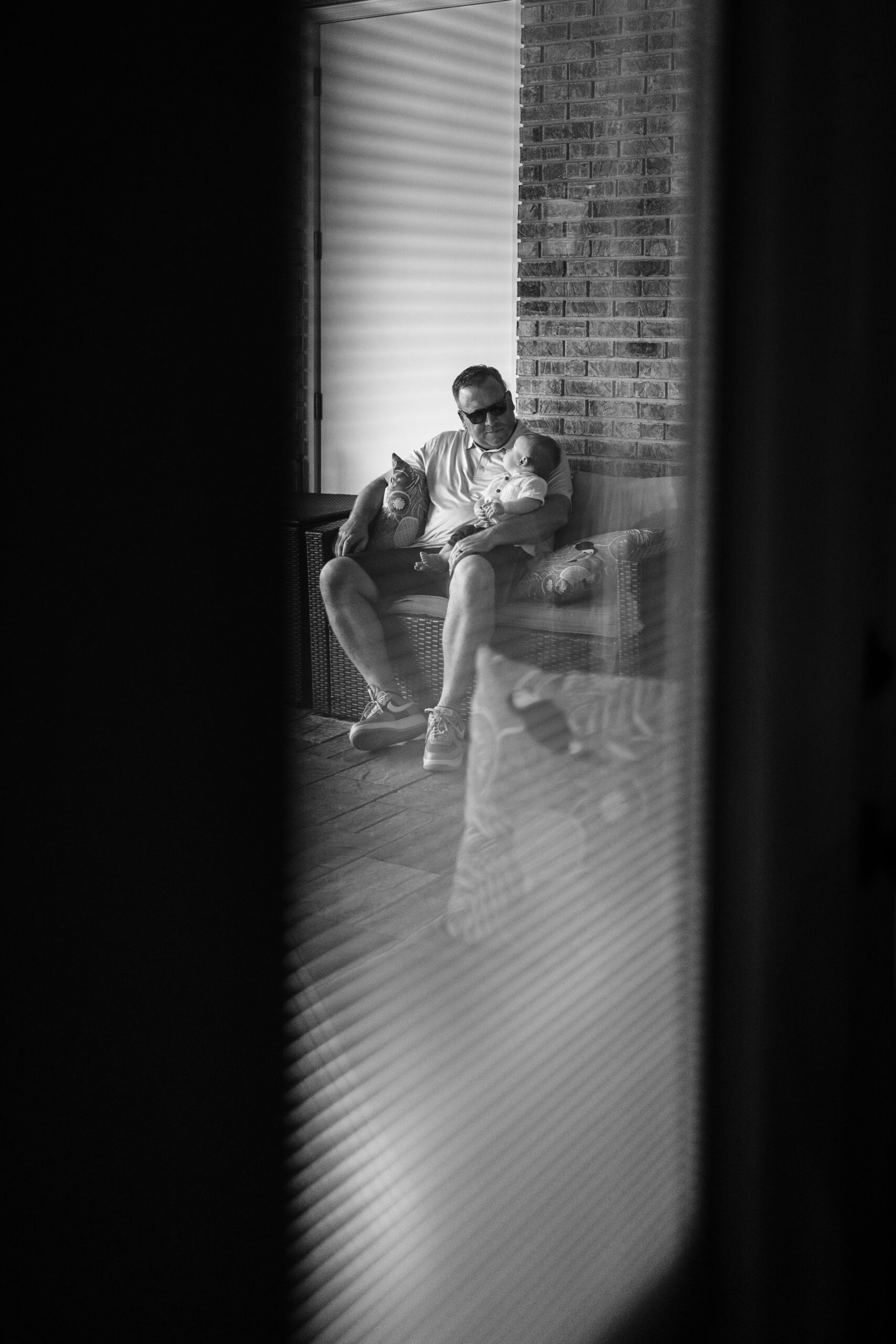
I think about the photos I have of my father. Every image of him with my kids. Every candid shot of him laughing, resting, just being. Those aren’t just images on a screen — they’re proof that he was here. They’re how my children will remember their grandfather. And they exist because someone thought to pick up a camera and capture an ordinary moment that turned out to be everything.
That’s what I want for your family too.
I’m grateful I can still capture her beauty, her spirit, and her spunk — and that those photos will keep her memory alive for generations.
These Are the Days
Utilizing my gift of photography while grieving the passing of my father has been a healing experience. It’s continually making an impact on myself, my family, and others.
No matter what we’re going through, having something to pour our hearts and minds into can be an enriching experience. For some, it’s painting or drawing. For others, it’s music or writing. And for a special few of us, photography is the therapeutic, healing part of our lives that keeps us grounded.
If you’ve experienced loss — or if this post simply reminded you that the people you love won’t be here forever — I want to leave you with this:
These are the days.
The ordinary ones. The chaotic ones. The ones where nothing remarkable happens except that the people you love are here, breathing, laughing, living. Those are the days worth documenting. Those are the moments that become your greatest treasures.
My father taught me that. His camera taught me that. And now, I get to pass that gift on to your family.
Book a documentary family session and let’s capture the moments that matter most, while they’re still right in front of you.
Categorized In:


